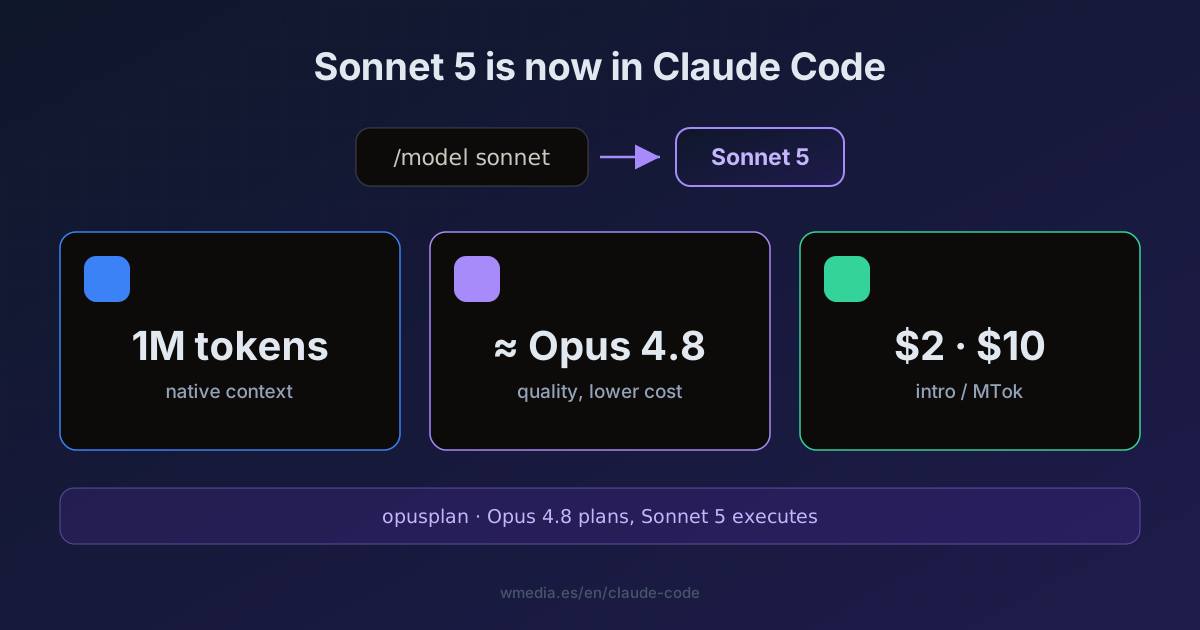
TL;DR Sonnet 5 is now in Claude Code. The
sonnetalias now resolves to it (the universal route:/model sonnet), and it's the Default on Pro, Team Standard, and per-seat Enterprise. It ships a native 1M-token context window, quality close to Opus 4.8 at a clearly lower price (intro $2/$10 per MTok through Aug 31), and makesopusplan(Opus plans, Sonnet executes) a great quality-to-cost combo. You need Claude Code v2.1.197+:claude update.
Working with Kimi 2.7 or Composer 2.5 (which is Kimi underneath), there's one thing you miss next to Opus: speed. It's a huge difference. You try Sonnet 4.6 and yes, it's faster, but it loses adherence: on reasoning-heavy tasks it falls short.
Sonnet 5 looks like Anthropic's answer to that gap. A frontier model that isn't trying to be the most powerful in its class, but the most balanced. Good news for when you don't need all the adherence, the power (and the price) of Opus, but still want quality agentic AI.
What changes in Claude Code
The official docs are clear: on the Anthropic API, sonnet now resolves to Sonnet 5. The universal route to it is /model sonnet, whatever your plan.
Mind the Default, it's not what it seems: Sonnet 5 is the Default on Pro, Team Standard, and per-seat Enterprise. But on Max, Team Premium, Enterprise pay-as-you-go, and the raw Anthropic API, the Default is Opus. On Max, if you change nothing, you stay on Opus, not Sonnet 5.
Three things that matter while coding:
- Native 1M context. Sonnet 5 ships a 1-million-token window by default; the old
sonnet[1m]trick is now redundant. opusplanlevels up. Opus to plan, Sonnet 5 to execute. Top-quality planning, fast and cheap execution.- It's the most agentic Sonnet. Per Anthropic, it finishes complex tasks where previous Sonnets stopped short, and checks its own output without being asked.
How to confirm it or switch
1. Update (or it won't even show up)
claude update
Sonnet 5 requires Claude Code v2.1.197 or later. On older versions it doesn't appear in the picker.
2. Check or pin the model
/model            # opens the picker, shows your current model
/model sonnet     # pins Sonnet 5 as the default for new sessions
Since v2.1.153, /model <alias> saves your choice as the default by writing the model field in your settings. For the plan+execute combo:
/model opusplan # Opus plans, Sonnet 5 implements
3. When to stay on Opus
Opus is still "the model of choice for higher accuracy". For critical refactors, delicate architecture, or when adherence matters more than speed, /model opus. For day-to-day agentic work, Sonnet 5.
Reference
| Alias / setting | Resolves to (subscription) |
|---|---|
sonnet |
Sonnet 5 |
opus |
Opus 5.5 |
opusplan |
Opus 5.5 (plan) + Sonnet 5 (execution) |
default on Pro, Max, Team, Enterprise, and API (v2.1.280+) |
Opus 5.5 |
| Sonnet 5 price (per MTok) | Input | Output |
|---|---|---|
| Intro (through Aug 31, 2026) | $2 | $10 |
| Standard | $3 | $15 |
Note: on Bedrock, Vertex, and Foundry,
sonnetstill resolves to Sonnet 4.5; there, select the full model name or setANTHROPIC_DEFAULT_SONNET_MODEL.
Update (Jul 24, 2026): the
opusalias no longer points to Opus 4.8, it points to Opus 5 (as of Claude Code v2.1.219). What changes, and the two things worth checking before you assume you're on it: Opus 5 in Claude Code.
Official docs: Model configuration
To understand which model wins (and why it sometimes resets on you), see /model in Claude Code. To decide when Sonnet vs when Opus, how to choose the right model. And above Opus, Fable 5.
With Opus 5 out, the split has moved: Sonnet 5 now earns its keep as the delegated model inside subagents more than as the main one. How the routing between the three looks, and what it costs to switch mid-session, is in Sonnet 5, Opus 5 and Fable 5.
Requirements
- Claude Code v2.1.197+ (
claude update). Thesonnetalias resolves to Sonnet 5 on the API; it's thedefaultonly on Pro, Team Standard, and per-seat Enterprise.